Robots could take on some of the most dangerous work in the shift from fossil fuels to cleaner energy. Their value will depend less on human-shaped machines and more on inspection tools, autonomous vehicles, robotic arms, and software that can work around energy equipment.
Quick read:
- Drones and ground robots can inspect wind turbines, solar fields, power lines, and storage sites.
- Robotic systems can reduce time spent in heat, at height, underground, or near live equipment.
- Maintenance, data quality, safety rules, and power supply still limit what robots can do.
Where robots can help
Energy projects spread across large and difficult sites. A solar field may cover a wide area, while a wind turbine places inspection work high above the ground. Transmission lines, substations, mines, and battery plants bring their own hazards.
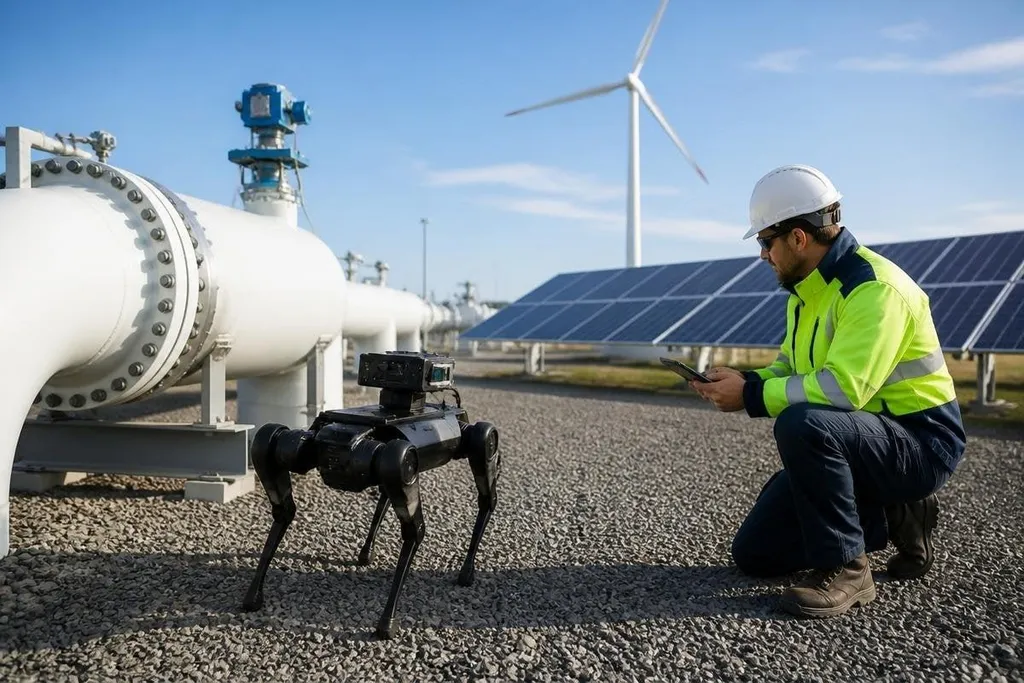
A drone with a camera can inspect blades, panels, towers, or lines without sending a person into the first inspection pass. A ground robot can carry cameras and sensors through a tunnel, yard, or damaged site. Thermal cameras can help find heat differences that a standard image would miss.
The useful step comes after the image. Software can compare new inspection data with earlier records and flag a crack, damaged panel, loose connection, or hot section of equipment for human review. That keeps a trained technician in control of the decision while reducing time spent collecting routine data.
Robotic arms can take on repeated work in factories that make batteries, solar modules, cables, or power electronics. Their role may include moving parts, placing components, or checking surfaces. The task needs a fixed work area and known objects, which makes factory work easier to control than work outdoors.
The work robots cannot remove
A robot still needs a route, a power source, a communications link, and a plan for failure.
Dust can block a camera. Rain can change traction. A damaged structure can make a map unreliable. A battery-powered system may need a swap or a return trip before the job ends.
Energy sites also contain equipment that can injure people or damage the robot. A machine working near high voltage needs clear separation, safe shutdown rules, and a way for a person to stop it. Remote operation can reduce exposure, but it doesn't remove the need for trained staff on site.
Data creates another limit. An inspection system may find a mark without knowing if it is harmless wear or a fault that needs repair. The answer depends on past records, equipment design, weather, and the cost of a wrong call. Human review remains part of the process.
Energy projects also need site facts before a robot's result can guide a purchase or a safety call. Robotics reporting for energy projects can tie a machine to its terrain, weather, power source, and human support. Those details explain why a deployment plan can't be copied from one site to another.
Why deployment will be site-specific
A robot that works well in a factory may struggle on a wind farm. Factory floors offer regular lighting, fixed routes, and controlled access. Outdoor energy sites add uneven ground, changing weather, wildlife, moving vehicles, and long distances between work areas.
That difference changes the buying decision. The right question is not whether a robot can complete a task once. It is whether the whole system can repeat the task, record useful data, recover from a fault, and fit existing safety rules.
The energy transition also creates demand for machines that can work alongside people. A technician may need to inspect the robot, approve a repair, move equipment, or take control when conditions change. A system that saves inspection time but creates a new support burden may not help the site.
I’d back robots first in inspection, transport, and repeated factory work, where the task can be measured and stopped safely.
A practical test before buying
Use these checks before choosing a robotic system for an energy project:
- Name the task: define the work, the site, and the result a person must receive.
- Check the environment: list heat, dust, rain, slopes, live equipment, and poor network coverage.
- Set the handoff: decide when a technician reviews data or takes control.
- Measure the full job: include charging, travel, setup, cleaning, repairs, and staff time.
- Plan failure: state where the robot goes when a sensor, motor, map, or link stops working.
A trial should measure the completed work, not the robot's best demonstration. For an inspection system, that means checking whether it finds useful faults and whether technicians can act on the records. For a factory arm, it means tracking completed parts, stoppages, and safe recovery after an error.
The next useful robots for clean energy may look ordinary: a drone with a thermal camera, a tracked vehicle with LiDAR, or an arm behind a guarded cell. Their success will be measured in safe inspections completed, faults found early, and maintenance work that people can do without entering the most dangerous parts of the site.